

DHS Uses DoD Logistics Contract for St. Paul 'Surge' Support
In its first awarded task order on the WEXMAC TITUS contract vehicle, DHS taps Response AI Solutions for surge support in the Twin Cities
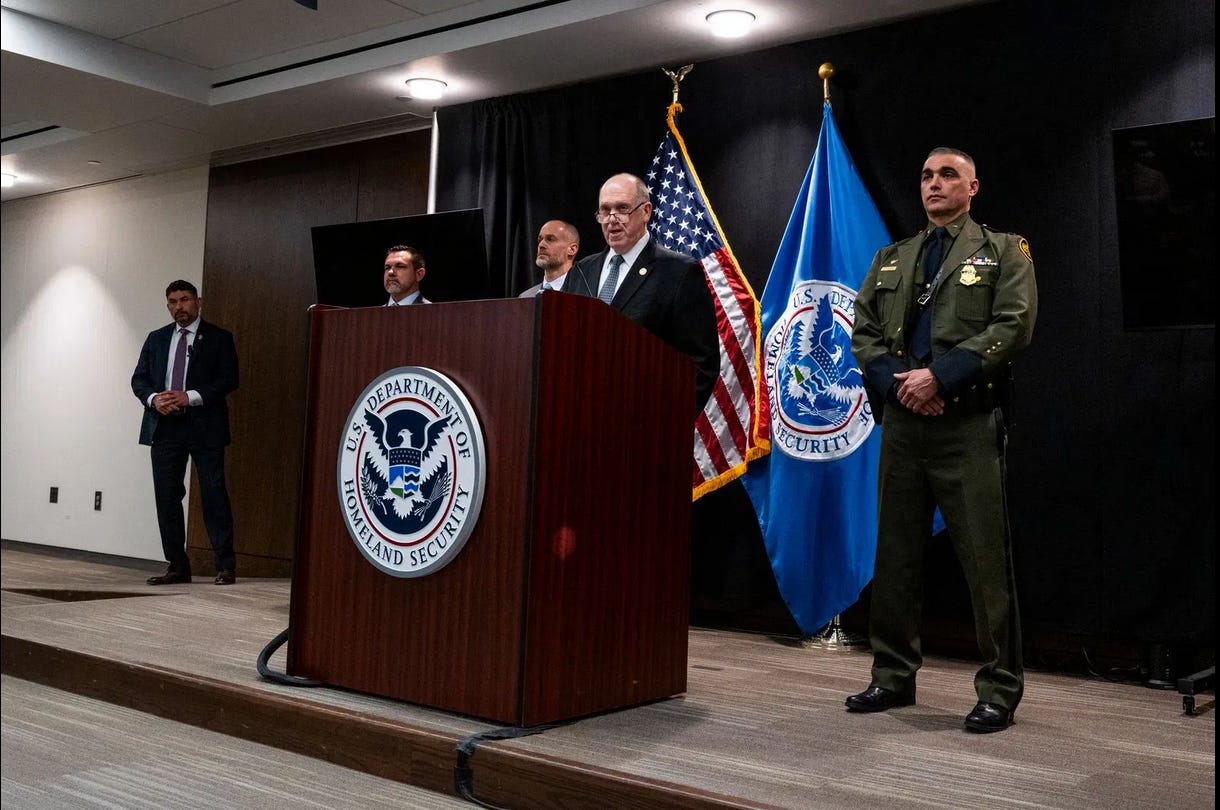
Last week on Feb. 9th, just three days before Tom Homan officially called off the surge operation in Minneapolis, Mn., the Department of Homeland Security issued a $2.6M contract to Response AI Solutions to procure “urgent services and supplies in support of surge law enforcement activities at St. Paul Area of Responsibility.”
This is the first DHS task order awarded under WEXMAC TITUS, a Department of Defense contract managed by the U.S. Navy. While federal agencies traditionally use this vehicle for rapid logistics and life support, DHS has now adapted it for detention services. Although the agency administratively moved the Camp East Montana contract to the WEXMAC framework last October, the action taken last week represents the first confirmed task order award under this new arrangement.
The news of the award confirms that DHS is using this DoD logistics contract for ICE enforcement and removal operations. By using WEXMAC, the agency is able to award contracts to a vetted list of companies, which speeds up the procurement process, all while avoiding the public scrutiny and oversight that comes with traditional public Federal procurement processes.
From Skip-Tracking to Surge Support
Response AI Solutions has been awarded several contracts by DHS over the last year. In December, we reported that they were one of 12 companies tapped by ICE to provide skip-tracing services, essentially a bounty-hunting contract to assist ERO in finding targeted individuals. Earlier in 2025, they were awarded a DHS Strategic Sourcing contract that was established to procure “emergency detention and related services for aliens in Immigration and Customs Enforcement custody.”
According to the company’s website, they provide AI-enabled medical services, base operations, and case management services for humanitarian and emergency operations.
“ ResponseAI was built to meet the urgent demands of humanitarian operations around the world. We combine global logistics capability with advanced technology to support critical missions in health, shelter, infrastructure, and emergency response. From infectious disease tracking to real time operational visibility, our solutions are designed to bring order and impact to complex humanitarian environments.” - Response AI Website
A ‘Small’ Force with a Large Bill
The shift to WEXMAC TITUS is a strategic move by DHS to avoid oversight and rapidly expand its logistical operations. Because WEXMAC is a Department of Defense vehicle, it operates under different disclosure rules than typical civilian agency contracts. By funneling millions through this military pipeline, DHS is effectively bypassing the public notice and competitive bidding requirements that allow taxpayers and lawmakers to see exactly what is being bought, where it is being deployed, and for how long.
This lack of transparency is especially troubling, given the timing of this task order award, and it raises questions about DHS’ plans in Minneapolis. Last week, on February 12, Tom Homan announced during a press conference that the Minneapolis surge is officially over. A few days later, he confirmed that more than 1,000 immigration agents had left the Twin Cities area, but he did clarify that a “small” security force will stay for a short period to protect remaining immigration agents. He did not define “small.”
It is possible that ResponseAI is supporting a "surge exit" or providing aid to the remaining immigration agents in Minneapolis. However, due to the restrictive nature of WEXMAC, the Statement of Work remains accessible only to DHS and the vetted companies listed on the contract — making it impossible to verify whether ResponseAI’s role is to facilitate a departure or to support a longer stay.
Future Use of WEXMAC TITUS
DHS’ use of WEXMAC does not come as a surprise. As we reported earlier this week, 24 companies were added to the contract, including The GEO Group, a private prison company with a long history of managing ICE detention contracts. With these additions, ICE now has a vetted pool of over 130 contractors it can tap to support its operations.
On top of that, the WEXMAC contract ceiling was recently increased to $65 billion. This financial expansion, combined with a period of performance that now extends to 2034, suggests that DHS is not just looking for short-term surge support. Instead, it appears they are building a multi-year logistical backbone that can be activated nationwide, all while remaining shielded from traditional oversight processes.