

Homeland Security Plans $100 Million Detention Facility in Washington State
Federal records show a major expansion of immigration enforcement infrastructure, including a 1,635-bed center and enhanced surveillance technology
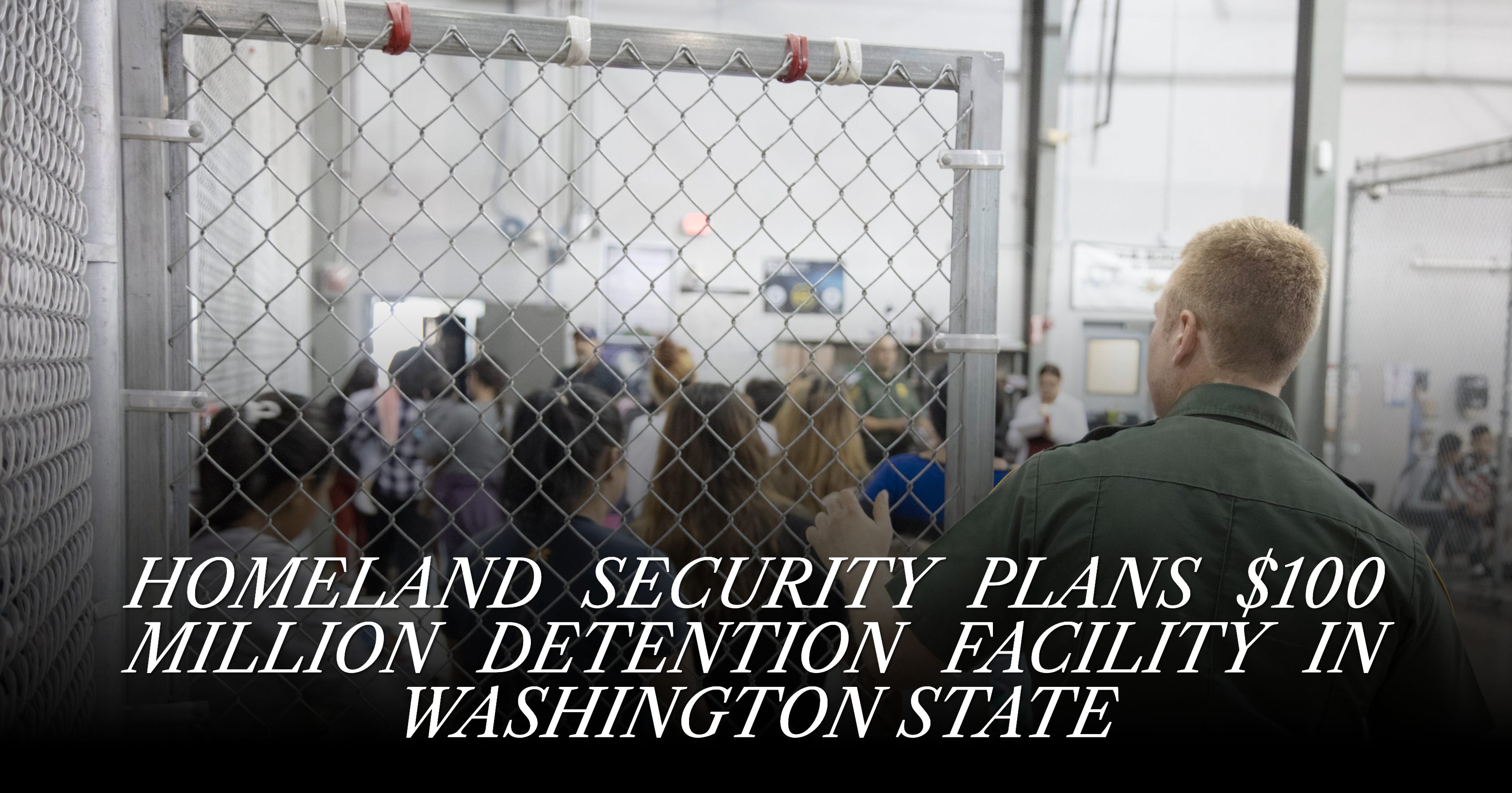
Federal procurement data and department forecasts reveal that the Department of Homeland Security is preparing for a significant expansion of its enforcement infrastructure in Washington State through 2026. The plans include the acquisition of a new 1,635-bed detention facility, a project with an estimated price tag exceeding $100 million.
The details, sourced from the DHS Acquisition Planning Forecast System and federal spending ledgers, describe a multi-year “plus up” of regional resources that extends from the Canadian border to the Tacoma tideflats.
A New Detention Mandate
On Dec. 29, 2025, Immigration and Customs Enforcement (ICE) published a forecast for a massive new detention and transportation hub. According to the document, the agency’s Seattle Field Office is seeking a contractor to provide a facility capable of housing 1,635 male and female detainees.
The solicitation, expected to be released on Jan. 22, 2026, requires a “turnkey” operation. The official description states:
“The contractor shall furnish the facility (1,635 beds: males and females) and services inclusive of a trained and qualified management staff, supervision, manpower, relief officer(s), uniforms, equipment, vehicles, and supplies (which include firearms, ammunition, body restraints, non-lethal devices, body armor, radios and cellular telephones), food service officers, and janitorial staff to provide support seven (7) days a week, twenty-four (24) hours per day.”
If completed, the facility would be larger than the state’s current primary immigration detention center, the 1,575-bed Northwest ICE Processing Center in Tacoma. While federal records do not yet name a specific location for the new site, they specify that it must support the agency’s operations within the state of Washington.
Hardening the Border
The expansion includes physical upgrades to border security infrastructure. In Blaine, Wash., records indicate that Advancia Remediation Services, LLC has been contracted to build a new armory at the Bellingham Training Facility and to install a reinforced roof on the sally port at the Blaine Border Patrol Station.
In Tacoma, the Federal Protective Service has secured a long-term agreement for firing range services through 2030, ensuring that federal officers maintain firearms qualifications for the next four years.
Digital and Forensic Capabilities
Procurement records from USAspending.gov show that ICE Homeland Security Investigations (HSI) is also investing in mobile surveillance and forensic technology.
In late 2025, the agency purchased a $131,400 “Mobile Forensics Lab” from Trivan Truck Body, LLC, based in Ferndale, Wash. This acquisition coincides with the purchase of “Cellebrite Inseyets” hardware—specialized technology used by law enforcement to bypass encryption and extract data from mobile devices.
Other recent acquisitions in the region include:
$144,318 for Safariland tactical holsters and locking systems from Darbonnier Tactical Supply in Oak Harbor.
$47,963 for IONSCAN 600 narcotics detection systems for Customs and Border Protection.
$15,399 for the installation of fiber-optic cables at the Bellingham Border Patrol Station.
Financial Scale
The scale of the regional buildup is reflected in the department’s existing financial obligations. In the current fiscal year, DHS has already obligated more than $79.6 million to The GEO Group, Inc. for detention and transportation services in the Seattle area.
The upcoming $100 million-plus solicitation for the 1,635-bed facility suggests that the federal government is moving to significantly increase its capacity to process, house, and monitor non-citizens in the Pacific Northwest. Together with new armories and mobile forensics units, the procurements establish a more permanent and technologically advanced enforcement footprint in the region.
The procurement pattern suggests a strategic reconfiguration of immigration enforcement in a region that has historically resisted federal hardline policies. Washington State, which declared itself a sanctuary state in 2019 and where local officials in Seattle and King County have repeatedly limited cooperation with ICE, now faces a federal infrastructure designed to operate with or without state and local support.
Whether this buildup represents preparation for heightened enforcement under the incoming administration or a longer-term strategic shift in DHS operations remains unclear, but the financial commitments—extending through 2030 in some cases—indicate that the expansion is intended to outlast any single political cycle.