

More Than Just ICE – A Glimpse into the U.S. Immigration Enforcement Apparatus

With constant headlines of ICE raids, reports of record-level detentions, and new immigration crackdowns announced regularly, it can be overwhelming to understand the scale at which the Trump administration is expanding its immigration enforcement efforts. On top of that, many of the agencies involved (ICE, CBP, etc.) operate in intentionally opaque ways, making their movements hard to predict and even fully grasp.
As our team has been analyzing federal procurement data, we have collected glimpses into this immigration enforcement infrastructure, including the key players and their roles in carrying out this administration’s immigration policies. We have outlined the historic role these agencies have taken in enforcement and detention operations and highlighted how those efforts have escalated since the beginning of this year.
This is not comprehensive of all government agencies supporting immigration enforcement and removal operations, but a demonstrative list of some of the biggest players.
Immigration and Customs Enforcement
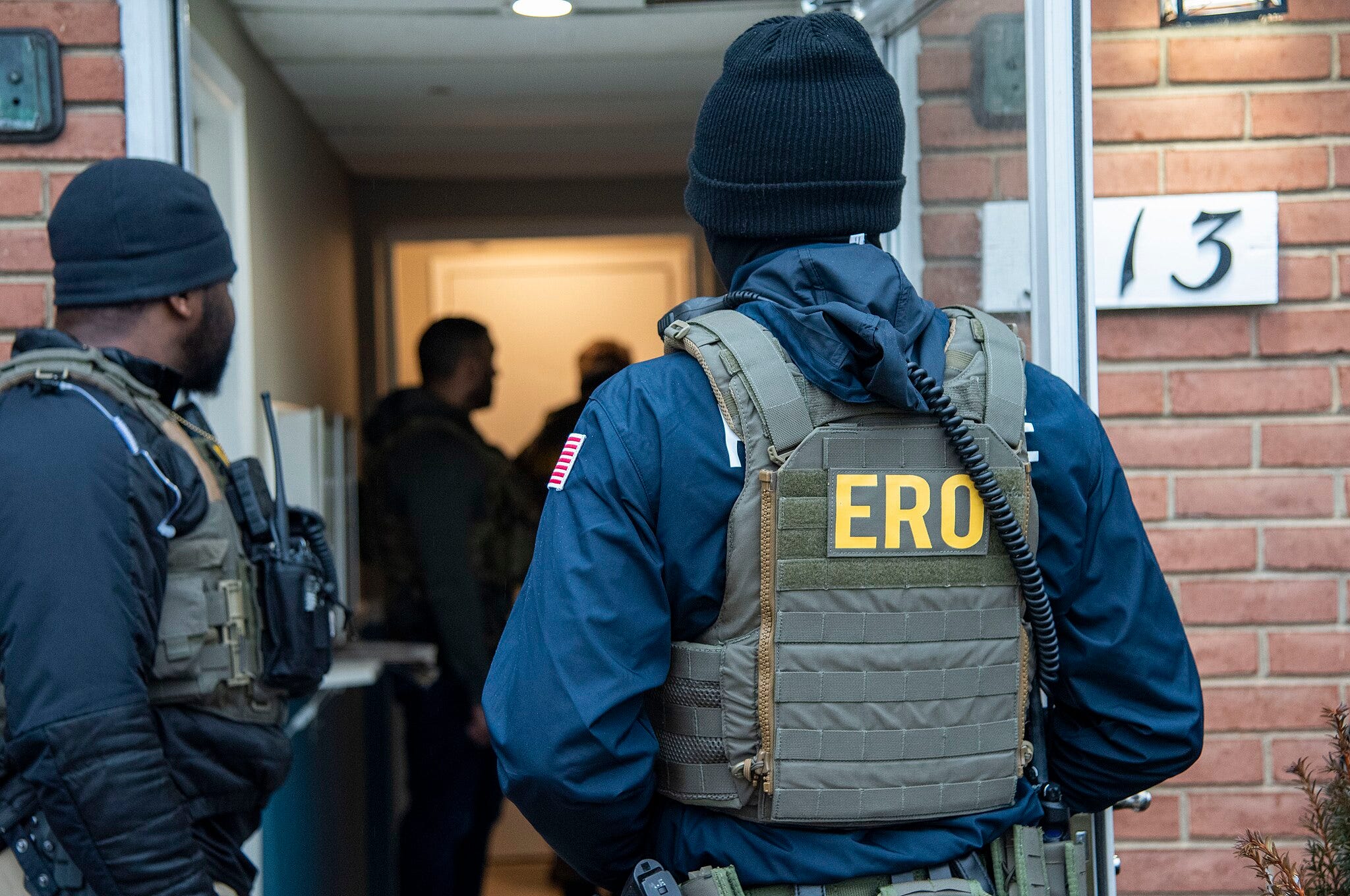
Historic role: Historically, in the United States, immigration enforcement has been carried out by the Immigration and Customs Enforcement agency – ICE (previously called the Immigration and Naturalization Service). Within ICE there are several components including Enforcement and Removal Operations and Homeland Security Investigations.
Enforcement and Removal Operations (ERO): ERO is likely what you picture when you think of ICE. They are tasked with all aspects of immigration law enforcement and historically have been the organization carrying out arrests.
Homeland Security Investigations (HSI): HSI’s official role is to serve as the global investigative unit within ICE (and DHS more broadly) with a focus on international customs crimes (e.g. smuggling, trafficking, exploitation, etc.). That said, since Trump’s inauguration, the agency has shifted its priority towards immigration enforcement. This September, HSI was the lead agency during an operation at a Georgia plant that resulted in over 400 arrests.
Escalated Role: Given the surge of removal operations across the country, ICE (both ERO and HSI) has become the face of immigration enforcement in the media. The reality is much more complex. While ICE has the official mission of enforcement and removals, they simply do not have the capacity to achieve the administration’s aggressive immigration policy.
To meet this demand, ICE is undergoing a frenzied hiring spree and has supplemented its ERO functions by granting immigration officer authority to other divisions within Department of Homeland Security (DHS), Department of Justice (DOJ), state and local law enforcement, and the US military. In January 2025, acting Attorney General Benjamine Huffman wrote a memo authorizing law enforcement officials in additional law enforcement agencies outside of ICE to perform certain functions of an immigration officer.
Customs and Border Protection
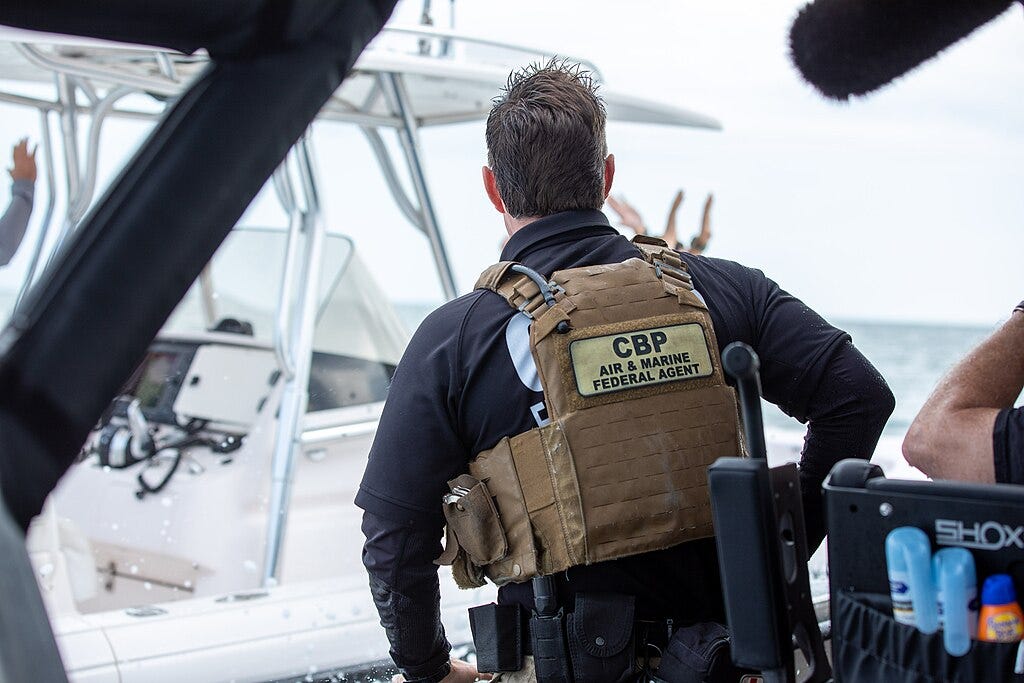
Historic role: Tasked with enforcing immigration laws at the border, ports, and airports.
Escalated role: Outside of ICE, Customs and Border Protection (CBP) is probably the most recognized agency conducting raids. CBP has expanded its enforcement of the border and is now augmenting ICE in the interior of the country by conducting raids in targeted cities. Led by Greg Bovino, the agency has swept through Chicago, Charlotte, and most recently, launched Operation “Catahoula Crunch” in New Orleans. CBP spending data backs up this surge in operations. For example, in September, CBP spent $2.5M on radio installations for new vehicles. Additionally, the agency announced its intention to establish contracts with eight different jails throughout Vermont and northern New York for the purposes of housing detainees transferred by CBP. Other surge indicators include a contract with Montgomery County, NY for detention center services and establishing new office spaces in Indianapolis, IN and Bloomington, MN.
U.S. Marshals Service

Operating under the Department of Justice, the U.S. Marshals Service is the oldest federal law enforcement agency whose mission includes protecting courts and judges, prisoner custody and transportation, fugitive apprehension, the witness protection program, and seizing criminal assets.
Historic role: As part of its prisoner transportation program, the U.S. Marshals Service runs the Justice Prisoner Air Transportation System (JPATs) which is the only government-operated scheduled airline in the nation and one of the largest transporters of prisoners in the world. JPATs was previously used to support ICE deportations but that practice stopped in FY2010, according to this report. Currently, the program conducts deportations of convicted criminals in its custody, which totaled 867 in 2024, per a Fact Sheet released by the agency.
Escalated role: The U.S. Marshals Service’ current role in immigration law enforcement is largely through interagency agreements that allow ICE to hold detainees in USMS facilities. It’s unclear how many agreements are currently in place, but according to a GAO report released in 2020, ICE had 85 USMS contract riders, and was actively using 62 of them.
United States Coast Guard (USCG)

Historic role: USCG is the maritime enforcer of U.S. immigration laws, and its mission includes deterring migrants from entering the country through maritime routes and supporting the U.S. border security.
Escalated role: USCG planes have been used to transport detainees in support of deportation operations. According to the ICE Flight Monitor report published by Human Rights First, “So far in 2025, at least 385 Coast Guard flights have been redirected from core missions to support immigration enforcement.” Coast Guard planes have been seen at BWI transporting detainees to Alexandria, LA for transfer to deportation flights.
In addition to providing planes for deportations, the USCG has increased its role in border security. In October, the agency announced Operation River Wall, a surge operation that “will bolster ongoing Coast Guard efforts to control, secure and defend approximately 260 miles of the Rio Grande River.” Federal spending data, again, provides more context to the story. In the same week the surge operation was announced, USCG purchased five airboats from Patriot Airboat Corporation “in support of national emergency at the southern border.” In the following weeks, they purchased additional boats from Woolridge Boats and law enforcement duty belts from Quantico Tactical, Inc. Since the announcement in October, the USCG has already spent over $675,000 in new equipment alone to support Operation River Wall.
State and Local Law Enforcement (the 287(g) program)
The 287(g) program allows local law enforcement offices to sign agreements allowing its officers to perform certain federal immigration enforcement functions. These arrangements effectively create a distributed network of local police who can run immigration checks, issue detainers, and escalate cases to ICE (our post last week details ICE’s plans for a national 287(g) call center and provides more details on the program).
Historic role: The 287(g) program has technically been in place since 1998, but the first agreements weren’t signed until the early 2000s. Even then, participation was limited. In Trump’s first term ICE made a huge push to recruit local law enforcement agencies to join the program which deputizes local law enforcement personnel to perform certain duties of an immigration officer.
Escalated role: In 2025 alone, 1,064 agencies have signed 287(g) agreements, which represents 88% of participants in the program. Of those agreements, 622 (58%) are Task Force Model agreements, the most aggressive form of deputization which allows ICE to grant immigration officer authority to select law enforcement personnel. The program continues to rapidly expand, with 20 agencies currently pending approval as of this writing.
The Bigger Picture
This handful of agencies is just the tip of the iceberg. Other agencies including USCIS, FBI, ATF, BOP, DEA, Secret Service, and the National Guard have been granted immigration enforcement authority. The result is a nationwide immigration law enforcement apparatus that has been given the legal authority and crucially, funding, to carry out this administration’s aggressive immigration agenda.
Our team is monitoring the federal procurement data of these agencies to try to find glimpses of where they are building infrastructure, how they are working together, and, perhaps most importantly, where they are going next.