

When Oversight Has No Teeth: DHS & the GAO
Who Holds the United States Government Accountable?
The United States Government Accountability Office (GAO) is just what it sounds like- a nonpartisan (unbiased) organization that is tasked with keeping our government accountable. The GAO, however, does not make policy, enforce laws, or run any federal programs- it has a very specific job that is much narrower and technical in scope: evaluating what federal agencies are spending money and ensuring that they are carrying out the responsibilities Congress has given them.
In order to ensure these duties are being carried out, the GAO will conduct studies and write reports on their findings. Once the GAO has found enough information to create their report, its findings are compiled and sent to lawmakers and the public for review. These reports are meant to be informative to all parties and not to direct agencies.
The GAO does not start these investigations at random, however, - these reviews are typically initiated through requests from congressional committees or individual members of Congress, requirements that were written into law, or the GAO’s own list of programs that have an elevated risk because of their high spending, operational complexity, and/or repeated mismanagement.
No matter how the agencies respond to these reports, the GAO oversight documents problems it found, establishes what problems the agency already knew about or didn’t know, and find any risks that could be corrected before any additional money or contracts are added to the program.
When Warning Signs Are Ignored
A frequent flyer for GAO oversight, DHS did almost nothing to rectify nor change their procedures in response to a 2025 GAO report. The oversight reporting noted that DHS’ planning for both temporary and future facilities lacked comprehensive cost analysis or strategic oversight. Instead of pausing to reflect, DHS has spent billions of dollars from 2019-2024 operating with “temporary”, “for emergencies” aka “soft-sided facilities,” (SSF) which are temporary tent cities used to hold and process people that have been apprehended at the border. The facilities were almost always exclusively contractor-run, with private companies providing meals, security, medical services, etc. to the SSF “cities.” Aka- expensive.

Despite DHS’ repeated description of the program as “temporary” or under “emergency measures,” the GAO found that DHS has relied on the SSFs multiple times, each with an enormous price tag. DHS’s lack of basic planning/oversight steps, which are typically standard for federal agencies of this size, suggests that the GAO’s pull over the DHS was severely lacking, if not none at all. This was coupled with a refusal to consistently document lessons that were learned from prior experiences with the SSFs and DHS just flat out decided not to consider the full costs of the program before adding more infrastructure. Why learn from your mistakes when you can just pour concrete over them?
In other words, the GAO findings showed (and still do) a system that expands first, evaluates later, and asks for forgiveness from no one.
Despite obligating over $4 billion total on the temporary SSFs, DHS began planning and contracting for permanent facilities called Joint Processing Centers, without correcting the issues that were identified in their temporary operations and skipping straight to breaking ground on JPCs. The GAO did not “scold” DHS for its spending habits of previous projects, nor this one, but it shed light on a pattern of expansion without discipline and a hope that DHS would self-correct. Instead, DHS spends billions, gets a “recommendation,” ignores it, continues building new facilities, and then rinse and repeat.
From Tents to Concrete: The Laredo Pivot
In October 2024, months before SSFs shut down, officials broke ground on a Joint Processing Center (JPC) in Laredo, Texas—a long-term facility designed to integrate and support multi-agency processing operations all in one location. DHS also issued environmental planning documents describing the project as a permanent processing center on roughly 100 acres in Webb County- a massive piece of land to detain people on. Despite starting the work almost two years ago, the facility is not operational, but DHS hopes to have it so by 2027- even without complete service and cost clarity.
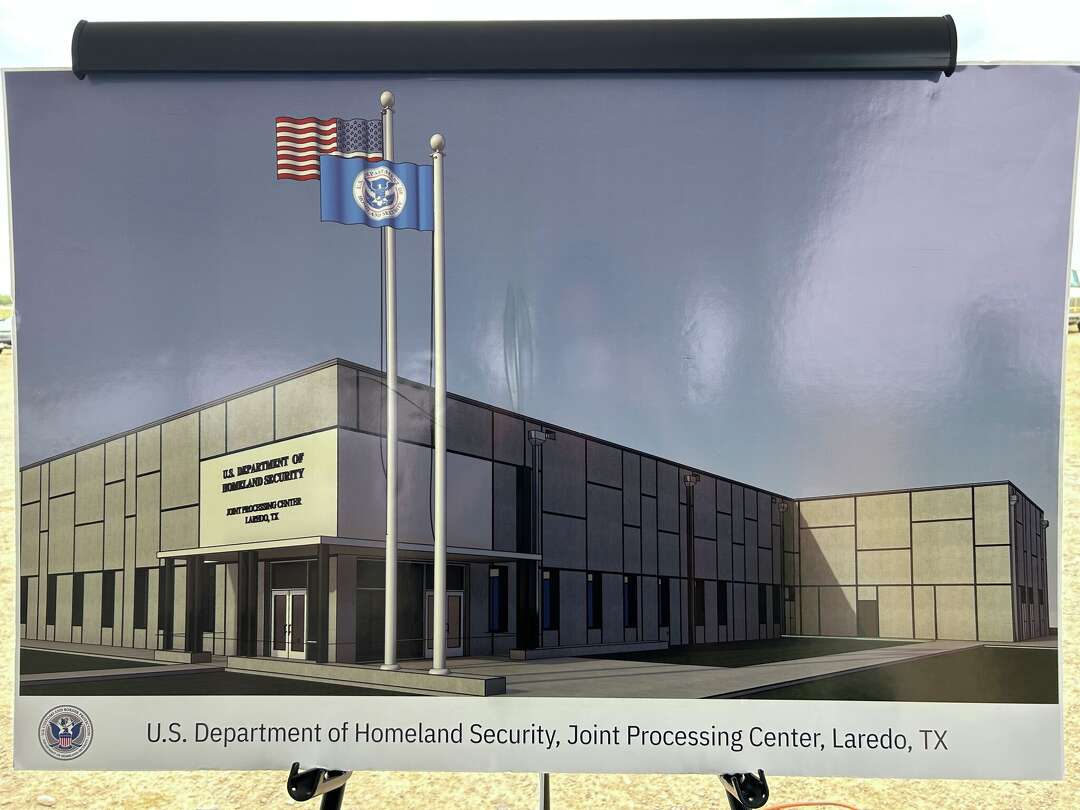
Early spring 2025, DHS (CBP) stopped operating soft-sided facilities altogether after what the agency described as “a significant drop in apprehensions”. In other words, the “emergency” tent infrastructure was no longer necessary (or perhaps not wanted?) —at least in that moment. And yet, the next move wasn’t to take a breath.
It was to shift from temporary structures to permanent ones.
This is where the story stops being about tents. Soft-sided facilities are built to expand and disappear. JPCs are built to stay. And once an agency starts committing to permanent facilities—land acquisition, construction timelines, multi-year operating costs—it is no longer planning for a short-term surge.
It is now building a system meant for steady, repeatable volume on a permanent basis.
So, why pivot to permanent infrastructure? Flexibility for DHS, not immigrants.
Built to Stay, Detention by Another Name
Once DHS has acquired permanent facilities and fixed infrastructure- i.e. land purchases, various warehouses and large commercial building, JPCs: it is no longer reacting to the patterns of undocumented individuals but preparing for a future in which capacity will always exist, regardless of need. These facilities do not need a surge or emergency to justify their existence; they just require the bodies to occupy it and DHS plans to fill them.
Permanent vs temporary facilities is not a unique situation to the border but seems to be an overarching theme in DHS. Over the last year, Immigration and Customs Enforcement (ICE) has increasingly relied on warehouse-style facilities and “processing centers” that are essentially indistinguishable from detention infrastructure, to temporarily house detainees. Once these facilities are built or acquired, they can be used or activated with a lot less eyes and public scrutiny than emergency measures. Permanent detention infrastructure turns emergency authority into everyday practice. In that sense, DHS’ move from SSF to permanent structures is no longer a reaction to current conditions, but already knowing they are going to use it in the future.
This shift reframes the entire question of oversight- the GAO can document whether DHS has planned appropriately or learned from past failures, but it cannot ask the more uncomfortable question:
Why is DHS escalating enforcement when they have not even defined the full services to operate its benchmark facility?
Congress CAN hold agencies accountable. It has to want to, though.
DHS is building these to imprison anyone who opposes. Anyone.